
A Services Agreement is a legally binding contract between a client and a service provider that sets out the terms under which services will be delivered. It defines the scope of work, payment terms, responsibilities, and legal protections for both parties. In the United Kingdom, such agreements are commonly used in commercial relationships and are supported by laws such as the Consumer Rights Act 2015.
This document is important because it provides clarity and legal protection in business relationships. It ensures that both parties understand what services will be provided, how much will be paid, and what standards are expected. It also helps prevent disputes by clearly defining responsibilities and remedies. Additionally, it ensures compliance with UK legislation, including the Late Payment of Commercial Debts (Interest) Act 1998 and the Data Protection Act 2018.
A Services Agreement is widely used across many industries in England and Wales, including:
It is typically used whenever one business provides services to another, whether on a short-term or long-term basis.
This document is required by:
It is essential for both parties to ensure that the working relationship is clearly defined and legally protected.
This section clarifies how terms used in the agreement should be understood. It ensures consistency and avoids ambiguity in interpretation.
This clause confirms that the client appoints the service provider and defines the services to be delivered. It also requires the service provider to perform the work with reasonable care and skill, in line with the Consumer Rights Act 2015.
This section specifies when the agreement starts and how long it will continue. It provides certainty regarding the duration of the business relationship.
This clause outlines how much the client will pay and when payment is due. It also clarifies that fees are exclusive of VAT and allows the service provider to charge interest on late payments under the Late Payment of Commercial Debts (Interest) Act 1998.
This section sets out the responsibilities of the service provider, including performing services in accordance with applicable laws and with reasonable skill and care.
This clause requires the client to provide necessary information, cooperation, and support to enable the service provider to carry out the services effectively.
This section determines who owns any intellectual property created during the provision of services. Ownership may belong to either party depending on what is agreed, which is crucial for protecting business assets.
This clause ensures that both parties keep sensitive information private. It protects business secrets, client data, and other confidential information shared during the agreement.
This section ensures that both parties comply with the UK General Data Protection Regulation and the Data Protection Act 2018 when handling personal data.
This clause limits the extent to which either party can be held liable for losses, while ensuring that liability for serious matters such as death, personal injury, or fraud cannot be excluded under English law.
This section explains how either party can end the agreement by giving notice. It also ensures that any rights or obligations that have already arisen remain enforceable after termination.
This clause confirms that the agreement is governed by the law of England and Wales and that any disputes will be resolved in its courts, providing legal certainty.
A Services Agreement is a key commercial document that ensures a clear, structured, and legally compliant relationship between a client and a service provider. It defines expectations, protects both parties, and reduces the risk of disputes. Without such an agreement, there may be uncertainty regarding responsibilities, payment, and legal rights, which could lead to significant business and legal risks.
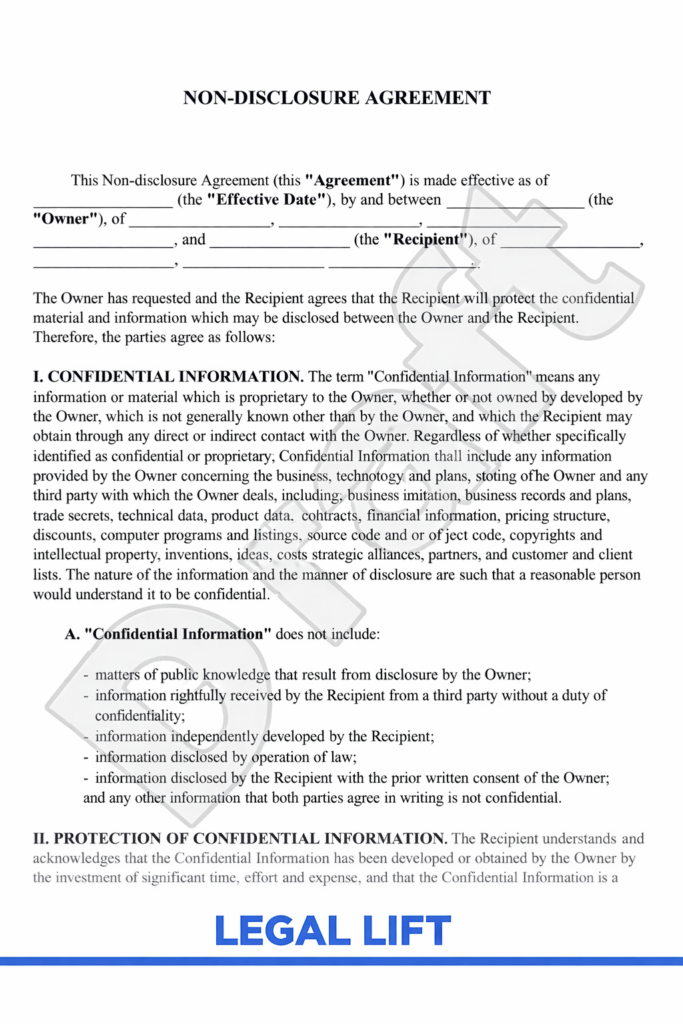
Ensure that proprietary information stays private
Ensure that proprietary information stays private
Ensure that proprietary information stays private
Ensure that proprietary information stays private