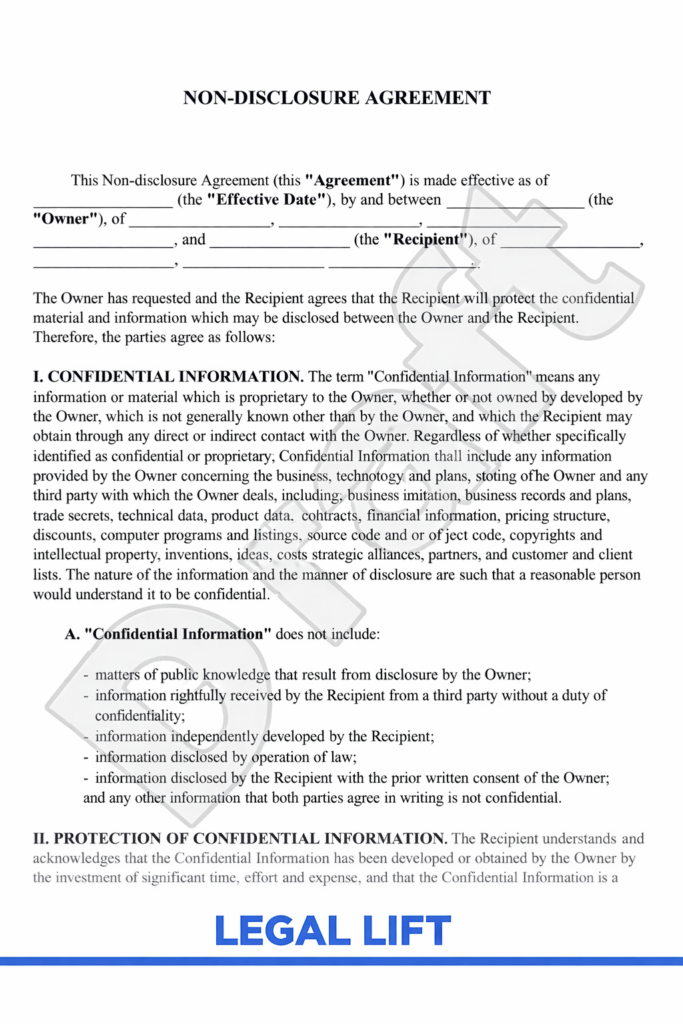
What is the document?
An Intellectual Property (IP) Licence Agreement is a legal contract that grants one party (the licensee) the right to use intellectual property owned by another party (the licensor) under specified conditions. Intellectual property may include patents, trademarks, copyrights, designs, software, or trade secrets. The agreement outlines the scope of use, duration, territory, and any fees or royalties.
Why is it used?
This agreement is used to legally authorise the use of intellectual property while protecting the rights of the owner. It ensures both parties understand their obligations, including how the IP can be used, any restrictions, and the financial or legal terms associated with the licence.
Where is it used?
IP Licence Agreements are used in various industries such as technology, publishing, entertainment, manufacturing, and research. They are applicable in both domestic and international transactions and are critical whenever intellectual property is shared, sold, or commercially exploited.
Who uses it?
- IP owners and creators
- Businesses and companies using third-party IP
- Legal advisors and IP specialists
- Technology transfer offices and licensing agencies
Benefits
An Intellectual Property Licence Agreement protects the rights of the IP owner while enabling legal commercial use by others. It provides clarity on usage rights, reduces the risk of infringement disputes, and ensures proper financial compensation through royalties or fees. Additionally, it strengthens business relationships, supports innovation, and provides a legal framework for enforcing IP rights in case of breach.