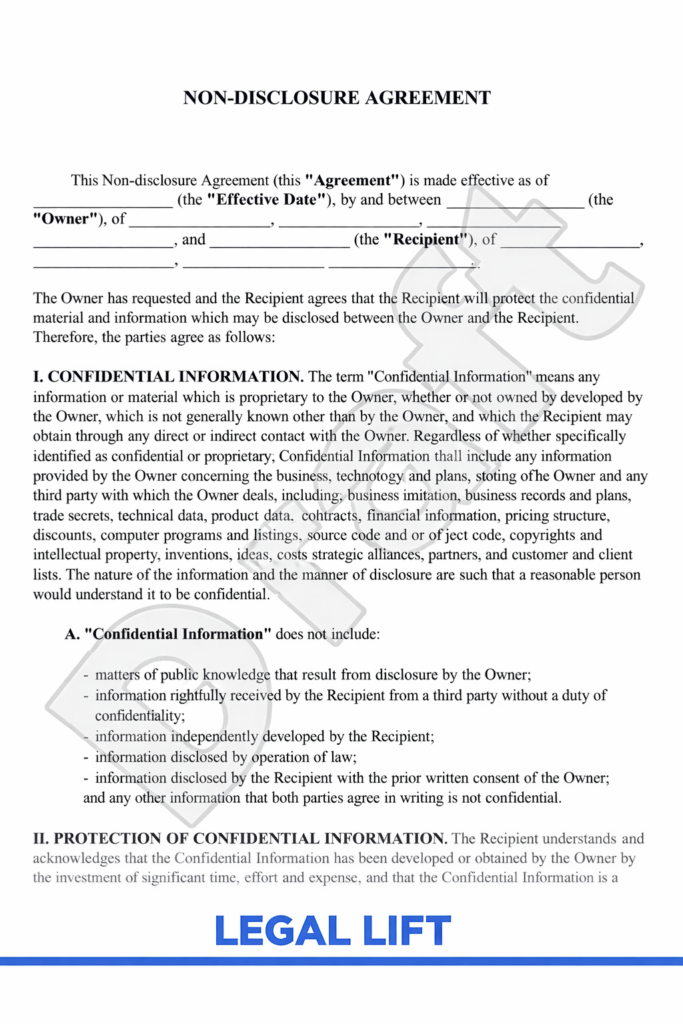
What is a Freelancer Agreement
A Freelancer Agreement is a legally binding contract between a business or client and an independent freelancer. It outlines the terms of engagement, including the scope of work, payment terms, deadlines, intellectual property ownership, confidentiality, and other responsibilities.
This agreement ensures that both parties have a clear understanding of their obligations and protects their rights throughout the freelance relationship.
Why a Freelancer Agreement is Used
A Freelancer Agreement is used to establish clear expectations and prevent disputes between clients and freelancers. It provides legal protection for both parties by defining the work to be performed, the payment schedule, and ownership of any deliverables or intellectual property.
It also ensures compliance with tax, employment, and contractual regulations, clarifying that the freelancer operates independently rather than as an employee. By formalising the relationship, it reduces misunderstandings and provides a reference in case of disagreements.
Where a Freelancer Agreement is Used
A Freelancer Agreement is used in a wide range of industries, including creative services, IT and software development, marketing, consulting, and professional services.
It is applicable whenever a business engages an independent contractor to provide services for a defined period or project. The agreement is maintained as part of contractual records and may be referenced for invoicing, legal compliance, or intellectual property rights.
Who Uses a Freelancer Agreement
A Freelancer Agreement is used by freelancers, clients, and businesses hiring independent contractors.
Legal advisers, HR departments, and contract managers often draft or review these agreements to ensure they are legally sound and reflect the intentions of both parties. Freelancers rely on the agreement to protect their rights, define payment terms, and clarify ownership of their work, while clients use it to secure services and maintain compliance.