
A Founders’ Agreement is a legal document entered into by the founding members of a startup or new business venture. It sets out the rights, responsibilities, and obligations of each founder, covering key aspects such as ownership of equity, roles in the company, decision-making processes, intellectual property rights, and procedures for resolving disputes.
The agreement acts as a foundational contract that helps formalise the working relationship between founders and provides a clear framework for managing the business from the outset.
A Founders’ Agreement is used to prevent misunderstandings and disputes between co-founders by clearly defining expectations and responsibilities. It ensures that everyone involved has a shared understanding of their contributions, equity stakes, and authority in the company.
It also helps protect the business by addressing potential issues such as the departure of a founder, dilution of shares, or the handling of intellectual property. By setting these terms early, the agreement minimises the risk of conflict and provides a roadmap for managing future challenges.
A Founders’ Agreement is used in startups and new business ventures during the early stages of formation. It is particularly important when multiple individuals come together to build a company, especially if they are contributing different skills, capital, or intellectual property.
It is applicable in jurisdictions such as England and Wales and other countries with similar corporate law frameworks, where co-founders wish to formalise their roles and responsibilities legally. The agreement is often referenced during funding rounds, investor negotiations, and corporate governance processes.
A Founders’ Agreement is used by the founding members of a company or startup who wish to establish a formal understanding of their partnership. It is particularly relevant for co-founders, early employees with equity, and investors who require clarity on ownership and governance structures.
Legal professionals, such as solicitors specialising in corporate law, are typically involved in drafting the agreement to ensure it is fair, comprehensive, and legally enforceable. Investors and venture capitalists often review these agreements to assess the governance and risk management framework of the startup.
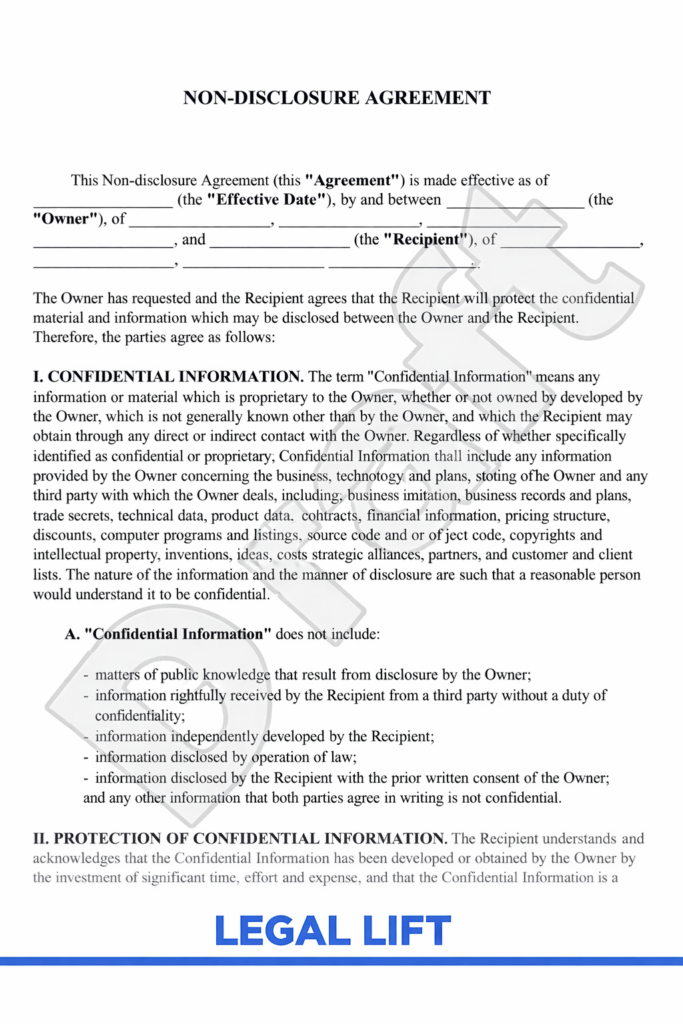
Ensure that proprietary information stays private
Ensure that proprietary information stays private
Ensure that proprietary information stays private
Ensure that proprietary information stays private