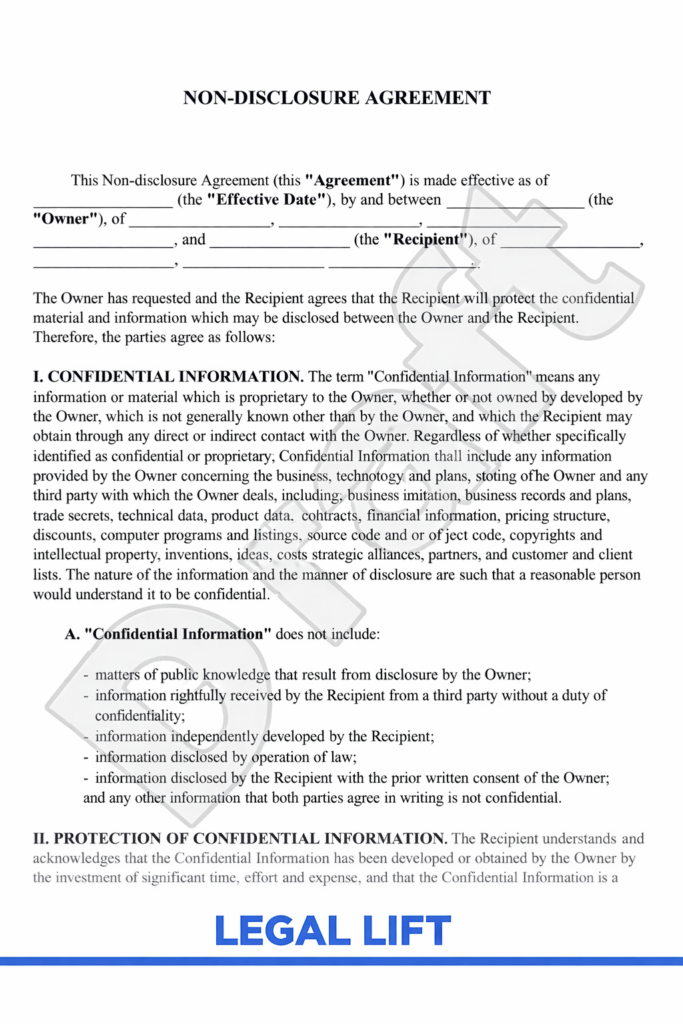
What is the document?
A Restrictive Covenants Agreement is a legal contract that places specific restrictions on an individual or business after the end of a professional or commercial relationship. These restrictions commonly include non-compete, non-solicitation, non-dealing, and confidentiality clauses designed to protect a company’s business interests.
Why is it used?
This document is used to protect a business from unfair competition and the misuse of sensitive information after an employee, director, or partner leaves the organisation. It ensures that confidential knowledge, clients, and trade connections are not exploited for personal or competitive advantage.
Where is it used?
Restrictive Covenants Agreements are used in employment contracts, partnership agreements, shareholder agreements, and business sale agreements. They are commonly applied in industries where client relationships, intellectual property, and confidential information are critical.
Who uses it?
- Employers and business owners
- Employees, directors, and partners
- Legal and HR professionals
- Companies involved in mergers or acquisitions
Benefits
A Restrictive Covenants Agreement protects business stability by preventing unfair competition and safeguarding confidential information. It helps retain client relationships and protects trade secrets. The document reduces the risk of disputes by clearly defining post-employment restrictions and provides legal enforceability if breached. Additionally, it supports long-term business security and maintains the organisation’s competitive advantage.