
A Mutual Non-Disclosure Agreement (NDA) is a legally binding contract between two or more parties in which each agrees not to disclose confidential information shared during a business relationship. The term “mutual” means that both parties are sharing sensitive information and are equally bound to protect it. In the United Kingdom, NDAs operate within general contract law and are supported by legislation such as the Data Protection Act 2018 and the UK General Data Protection Regulation.
This document is important because it protects confidential and commercially sensitive information from being disclosed or misused. It helps businesses share information safely when exploring partnerships, negotiating deals, or working on joint projects. Without an NDA, there is a significant risk that valuable information such as trade secrets, business strategies, or client data could be exposed or used unfairly. It also provides a legal basis for taking action if confidentiality is breached.
A Mutual NDA is commonly used in a wide range of business situations in England and Wales, including:
It is usually signed before any confidential information is exchanged.
This document is needed by:
It is particularly important where both parties are disclosing proprietary or confidential material.
This section explains how key terms such as “Confidential Information” are defined. It ensures clarity and avoids misunderstandings about what information is protected.
This clause defines what information is considered confidential. It may include business plans, financial data, technical information, client lists, and trade secrets.
This section sets out the responsibilities of each party. Typically, both parties agree to:
This clause outlines situations where disclosure is allowed, such as when required by law or regulatory authorities. It ensures that the agreement does not conflict with legal obligations.
This section identifies information that is not protected, such as:
This clause specifies how long the NDA will remain in effect and how long confidentiality obligations continue after the agreement ends. Often, confidentiality obligations extend beyond the termination of the agreement.
This section requires parties to return or destroy confidential information once the agreement ends or upon request. This helps prevent unauthorised use after the relationship ends.
This clause ensures that any personal data shared is handled in compliance with the UK General Data Protection Regulation and the Data Protection Act 2018.
This section explains the consequences if confidentiality is breached. It may allow the injured party to seek damages or injunctive relief through the courts.
This clause confirms that the agreement is governed by the law of England and Wales and that any disputes will be resolved in its courts.
A Mutual Non-Disclosure Agreement is a critical document for protecting sensitive information in business relationships. It enables trust between parties by ensuring that shared information remains secure and is only used for its intended purpose. Without an NDA, businesses face significant risks, including loss of competitive advantage, reputational damage, and potential financial loss. It provides a clear legal framework that safeguards confidential information and supports secure collaboration.
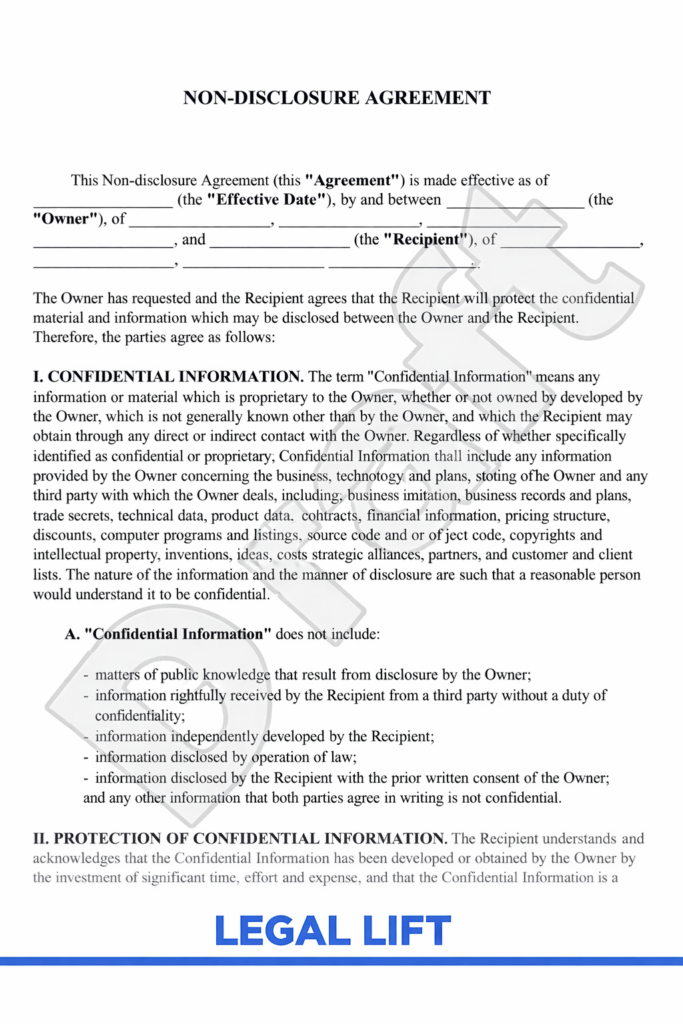
Ensure that proprietary information stays private
Ensure that proprietary information stays private
Ensure that proprietary information stays private
Ensure that proprietary information stays private