
An Affidavit, also known as a Sworn Statement, is a formal written declaration of facts that is confirmed by oath or affirmation before an authorised official such as a solicitor, notary public, or commissioner for oaths. It is used as evidence in legal matters and must be truthful, as providing false information can lead to legal penalties.
This document is used to present verified facts in legal proceedings or official matters. It provides a legally recognised statement of truth that can be relied upon in court, administrative processes, or other formal investigations.
Affidavits are used in courts, legal disputes, property matters, immigration cases, financial declarations, and other official proceedings where written evidence is required under oath.
An Affidavit provides strong legal evidence because it is sworn under oath, making it highly credible. It helps support or confirm facts in legal cases, reduces the need for oral testimony in some situations, and ensures accountability. Additionally, it provides a clear and structured way to present factual information in formal legal processes.
An Affidavit, also known as a Sworn Statement, is a formal written declaration of facts that is confirmed by oath or affirmation before an authorised official such as a solicitor, notary public, or commissioner for oaths. It is used as evidence in legal matters and must be truthful, as providing false information can lead to legal penalties.
This document is used to present verified facts in legal proceedings or official matters. It provides a legally recognised statement of truth that can be relied upon in court, administrative processes, or other formal investigations.
Affidavits are used in courts, legal disputes, property matters, immigration cases, financial declarations, and other official proceedings where written evidence is required under oath.
An Affidavit provides strong legal evidence because it is sworn under oath, making it highly credible. It helps support or confirm facts in legal cases, reduces the need for oral testimony in some situations, and ensures accountability. Additionally, it provides a clear and structured way to present factual information in formal legal processes.
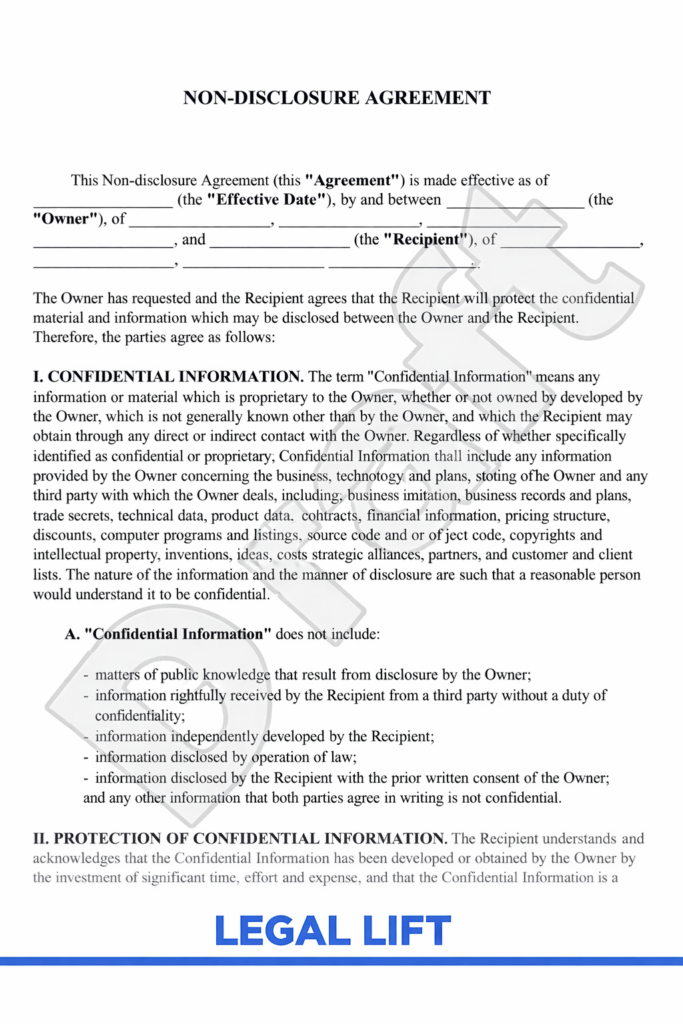
Ensure that proprietary information stays private
Ensure that proprietary information stays private
Ensure that proprietary information stays private
Ensure that proprietary information stays private